A Modest Visionary
Great figures of Croatian Natural Science — Mijo Kišpatić
an exhibition at Croatian Natural History Museum
ABOUT
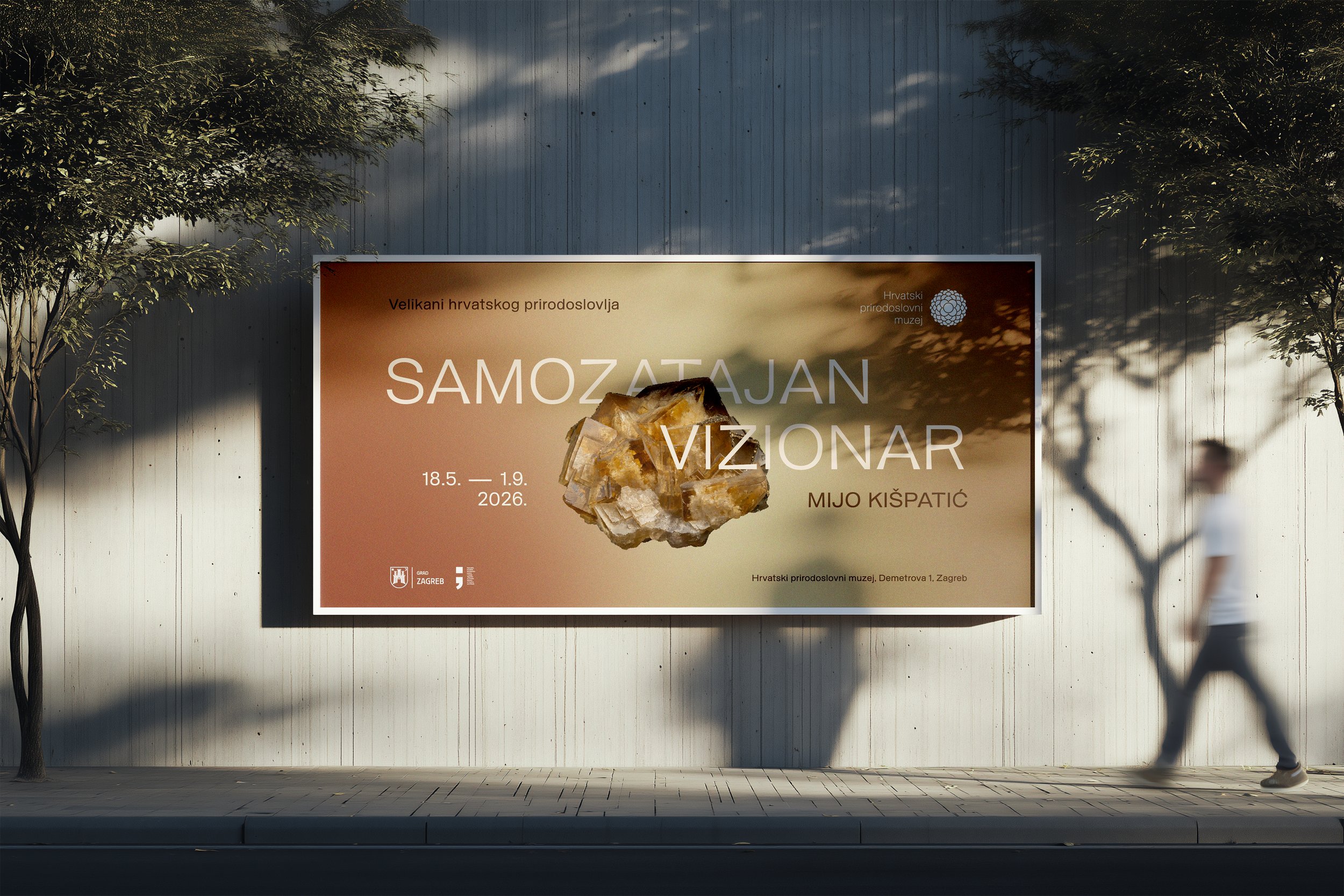
Created for the Croatian Natural History Museum, the exhibition Great Figures of Croatian Natural History – Mijo Kišpatić combines a visual identity and exhibition design inspired by the scientist's geological legacy.
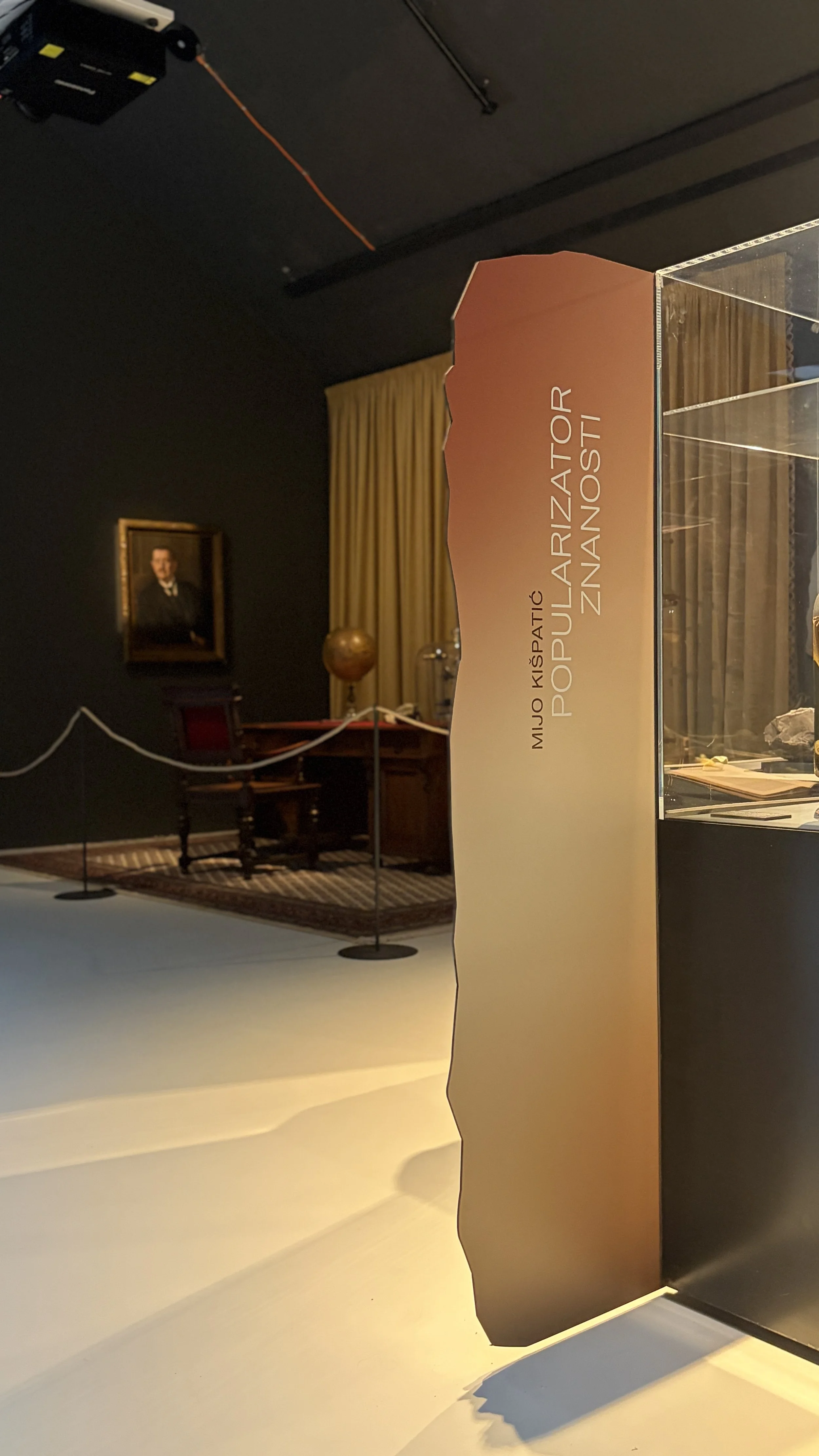
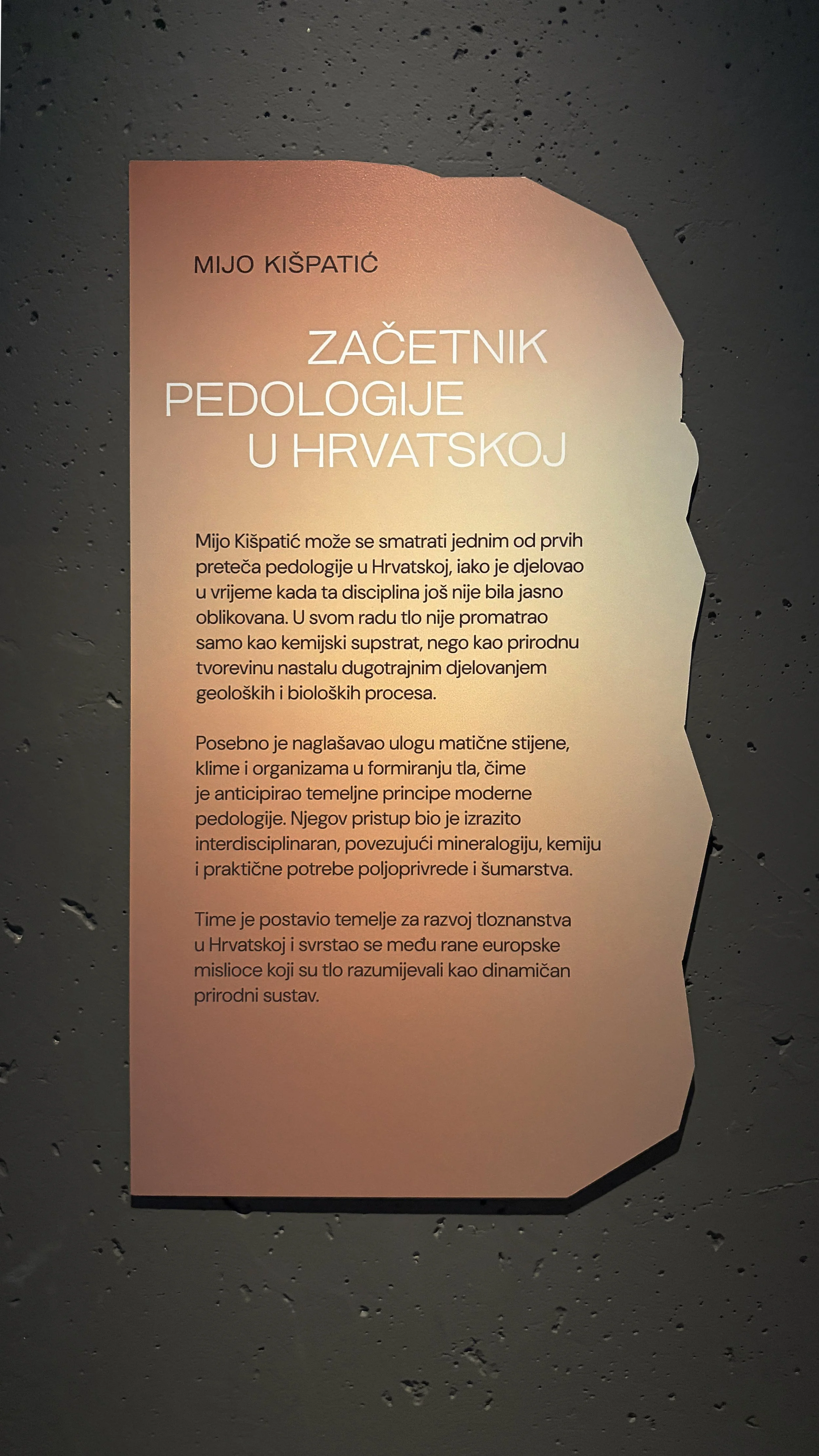
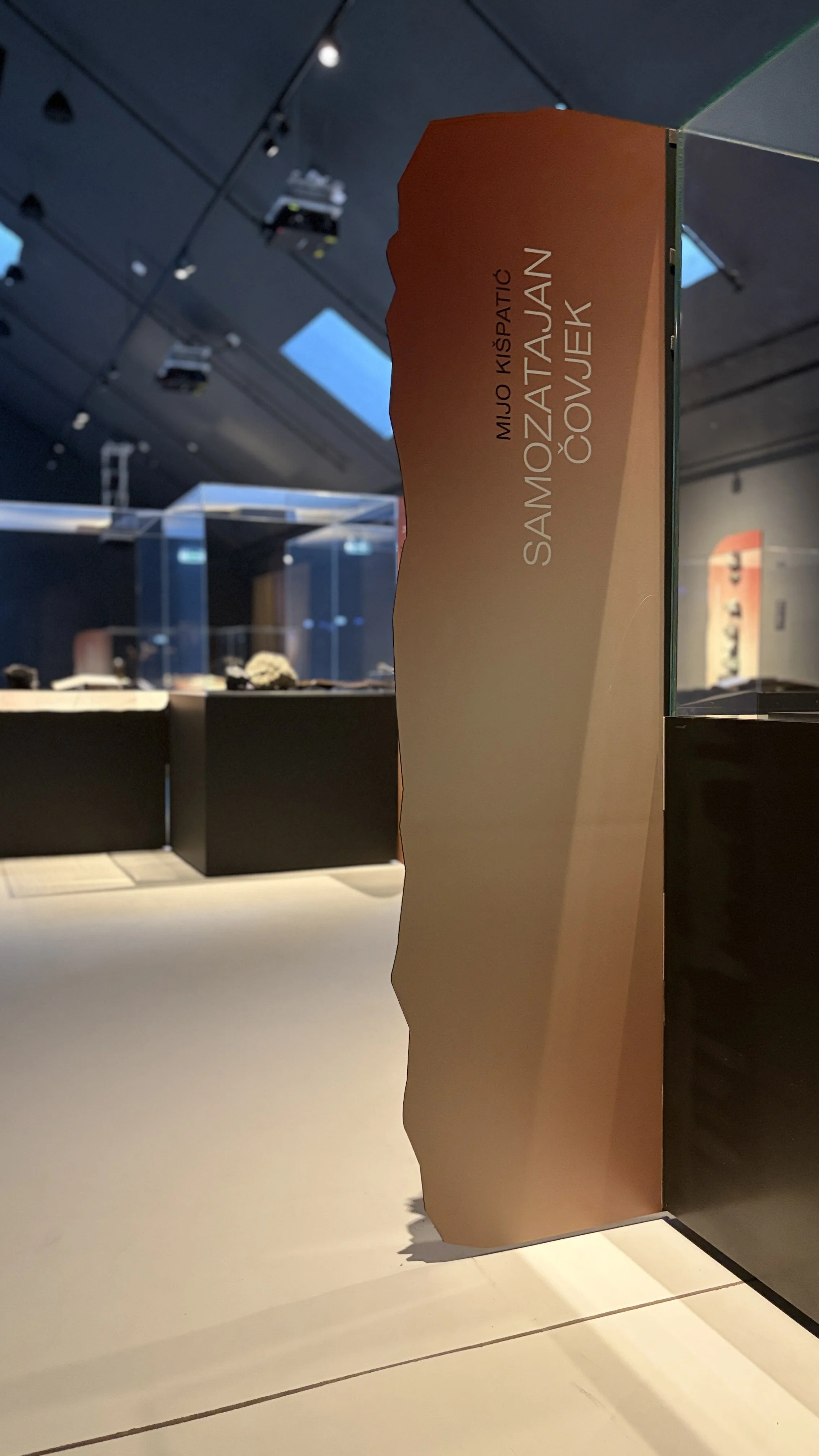
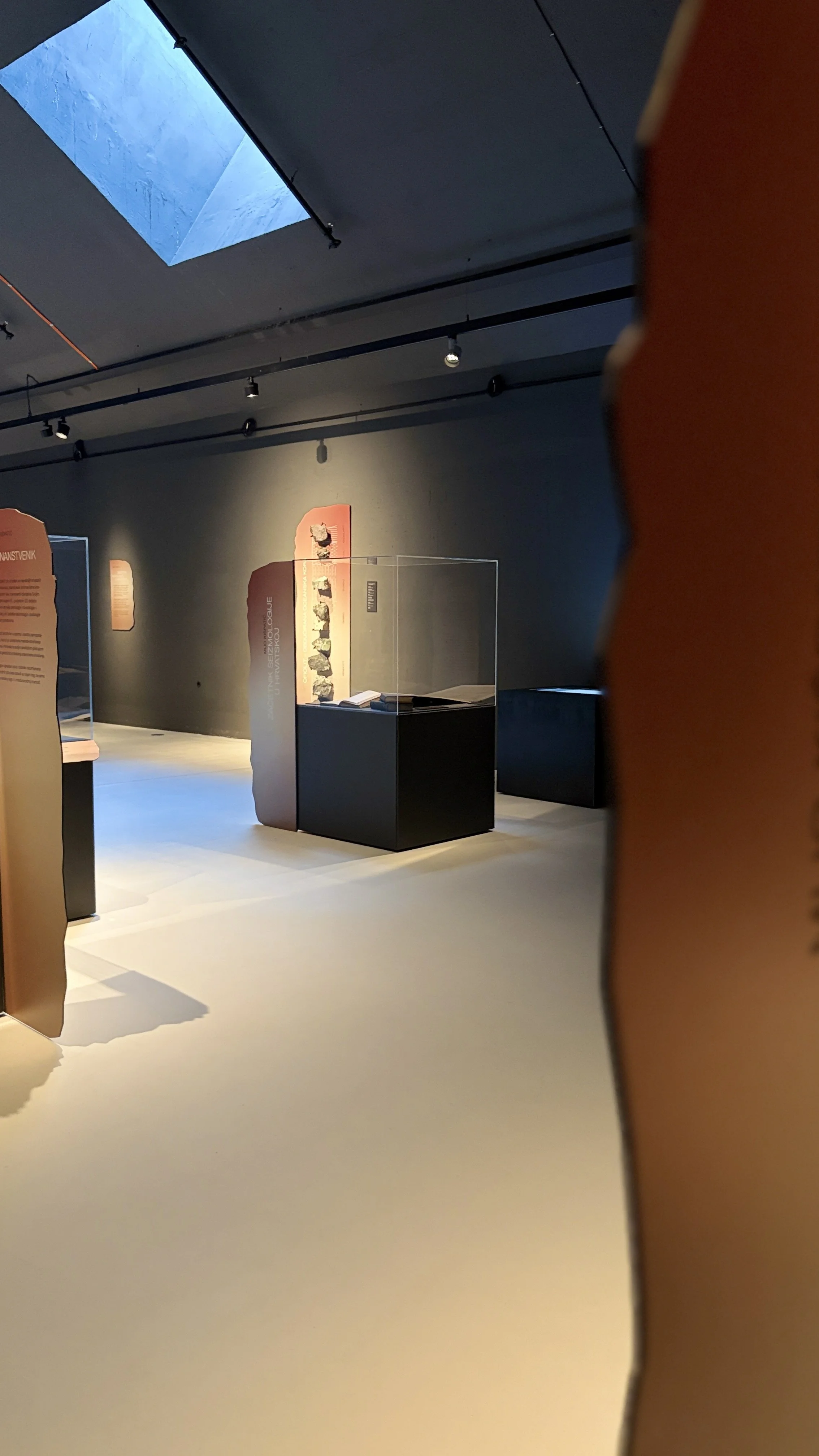
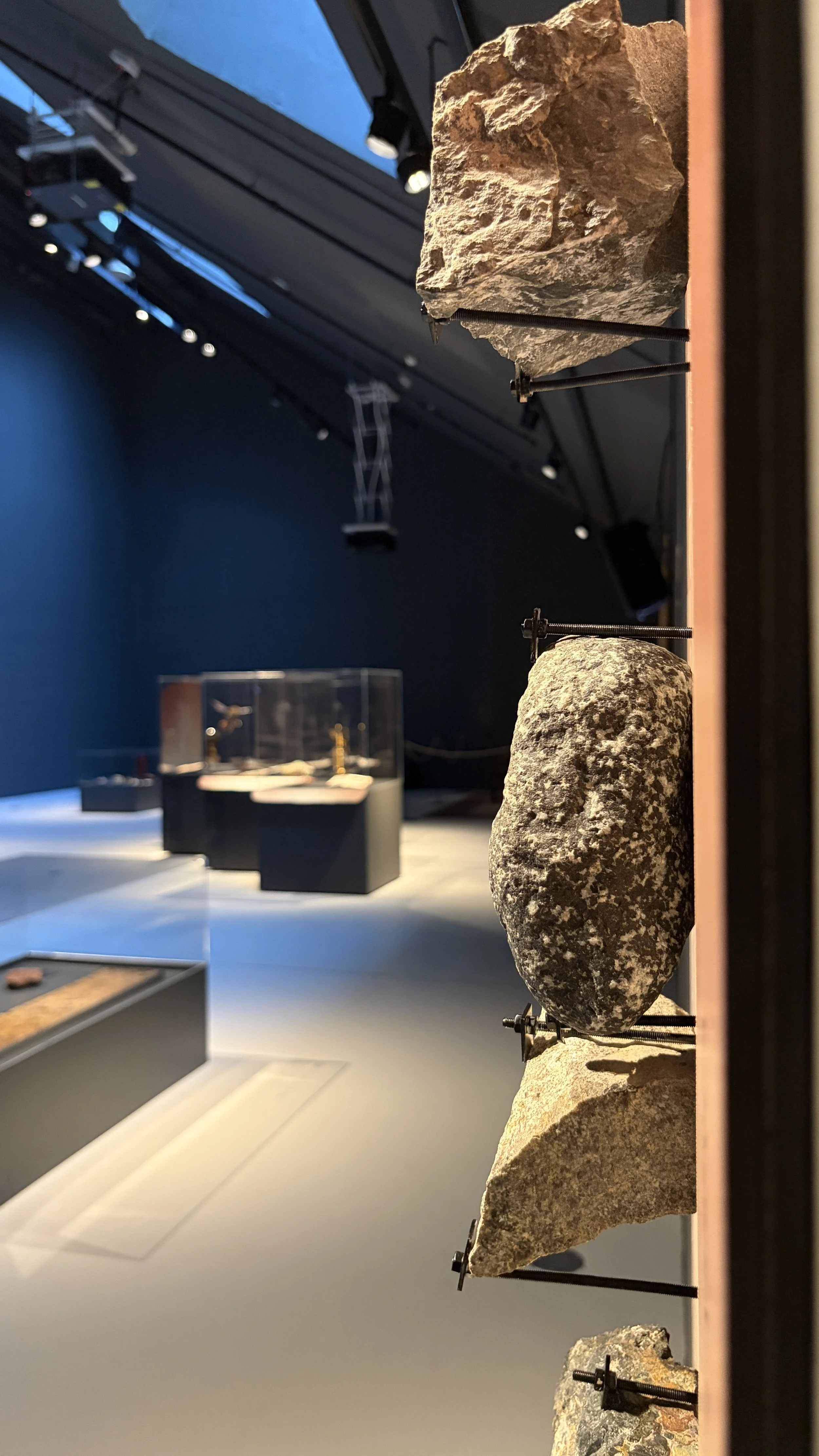
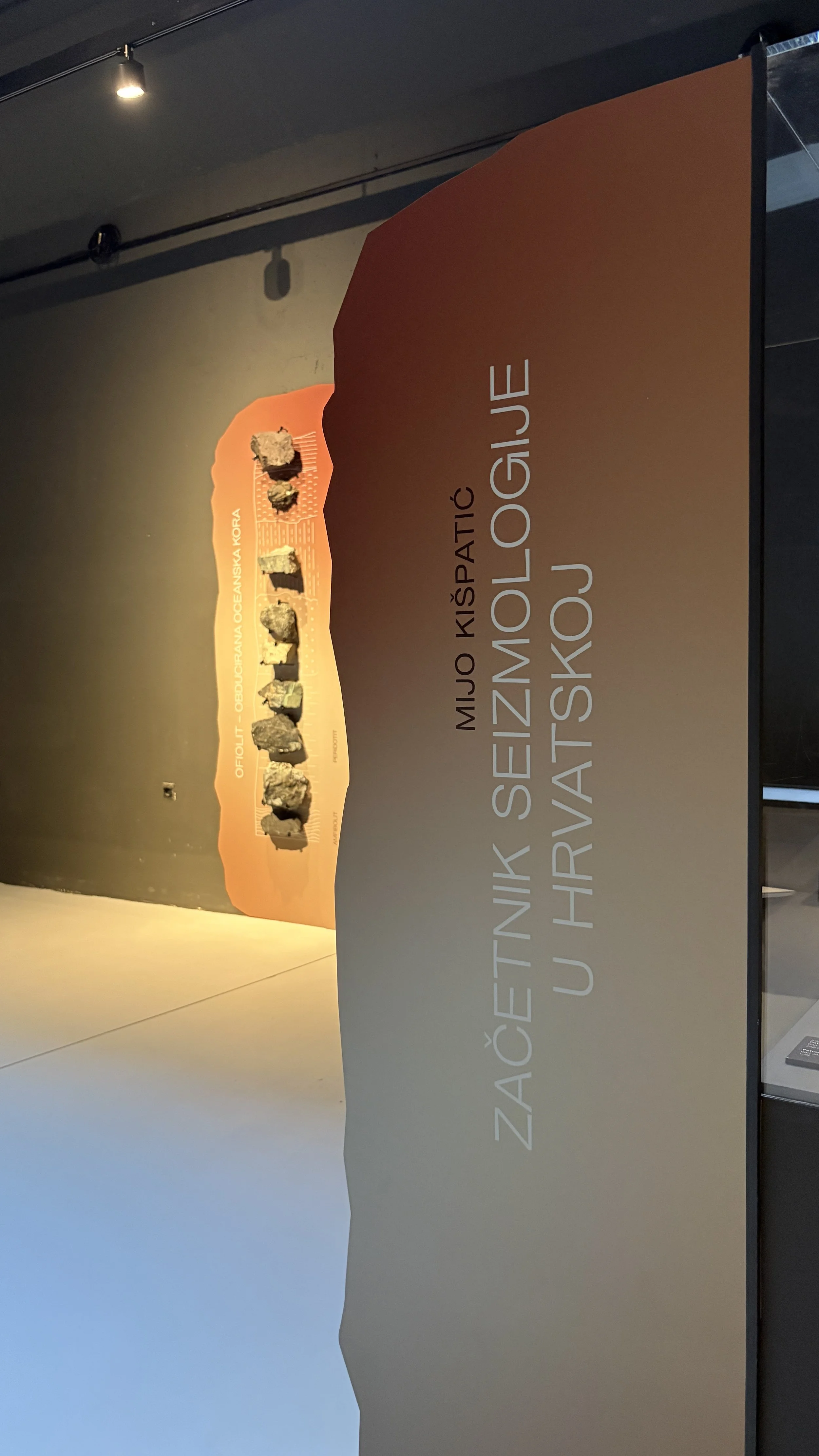
The visual identity is rooted in the fragment of a rock, a motif that reflects Kišpatić's scientific work and geological research. Through animation, a typographic system, and spatial elements, a visual language was developed to express the processes of exploration, discovery, and interpretation of natural heritage. Organically shaped exhibition panels, inspired by the structure of rock formations, further connect the graphic identity with the exhibition design, creating a cohesive and immersive spatial experience.
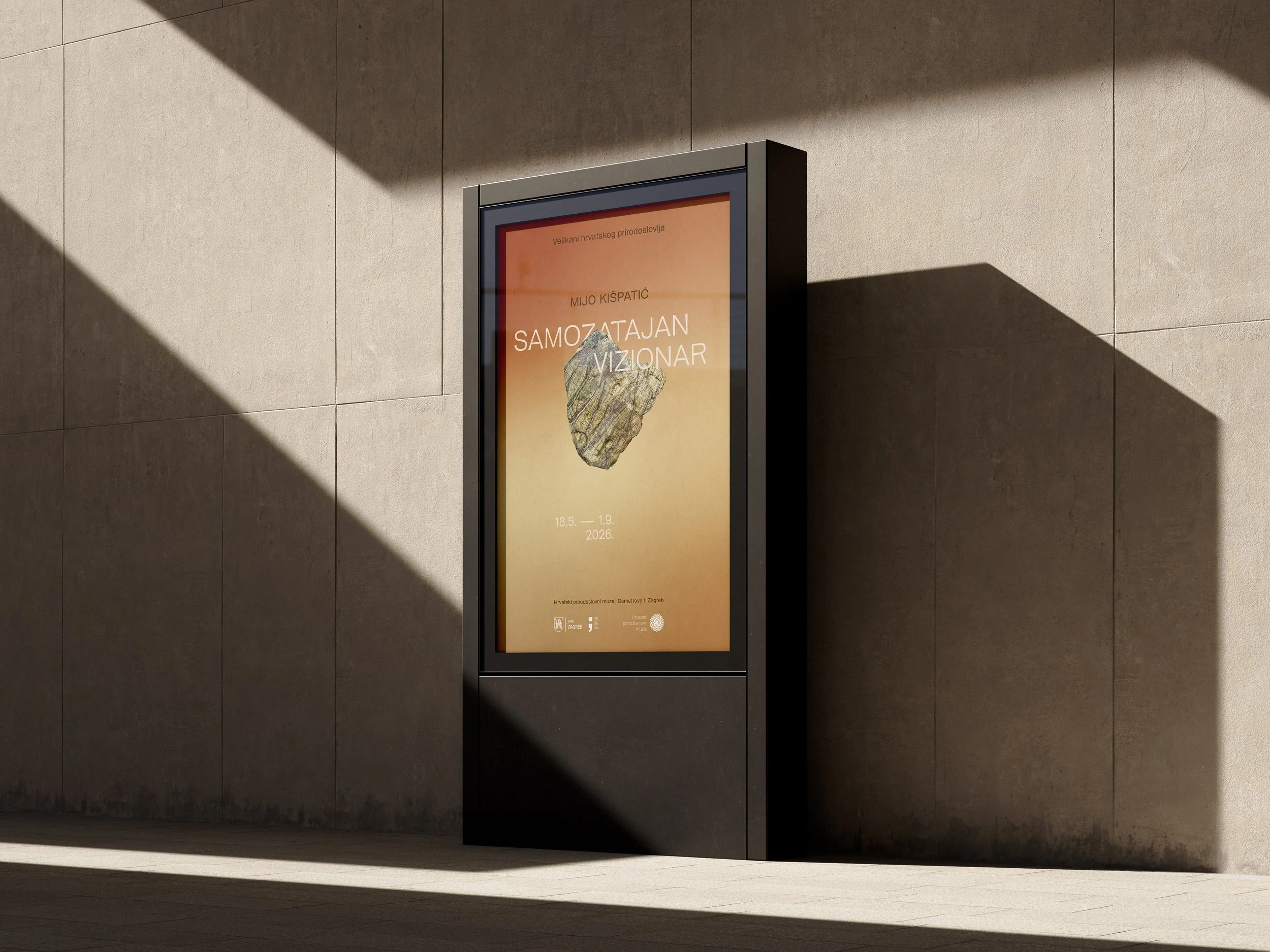
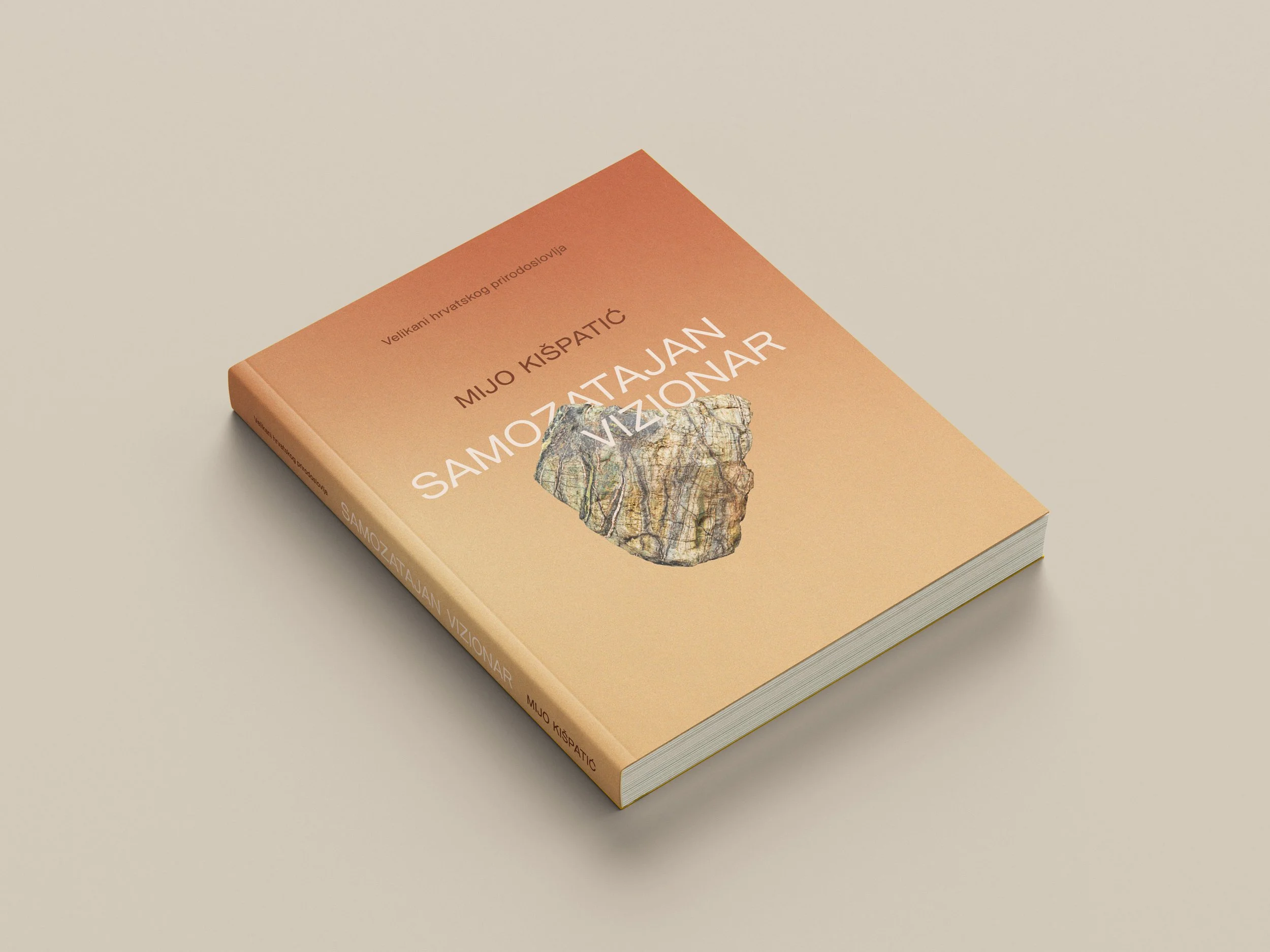
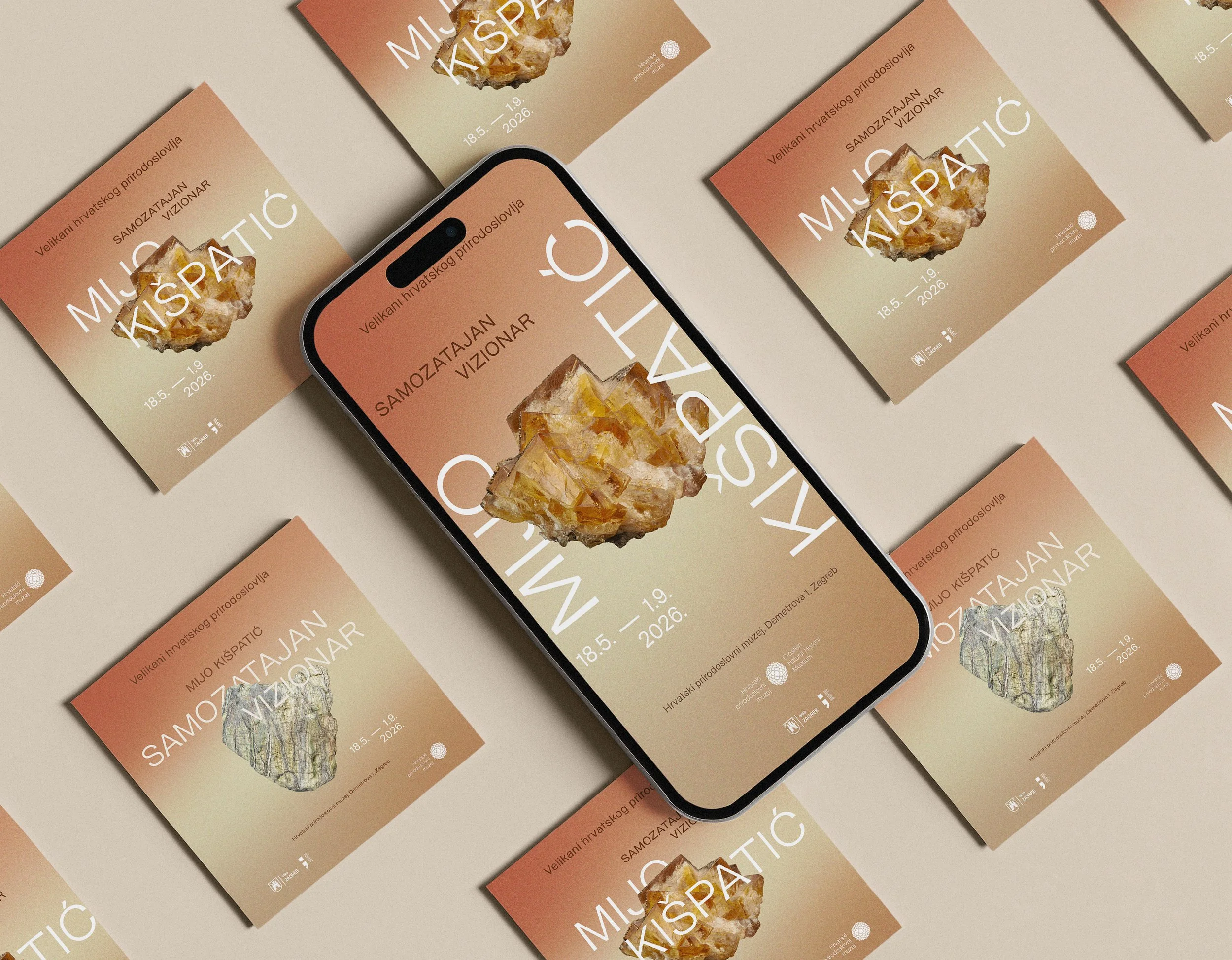
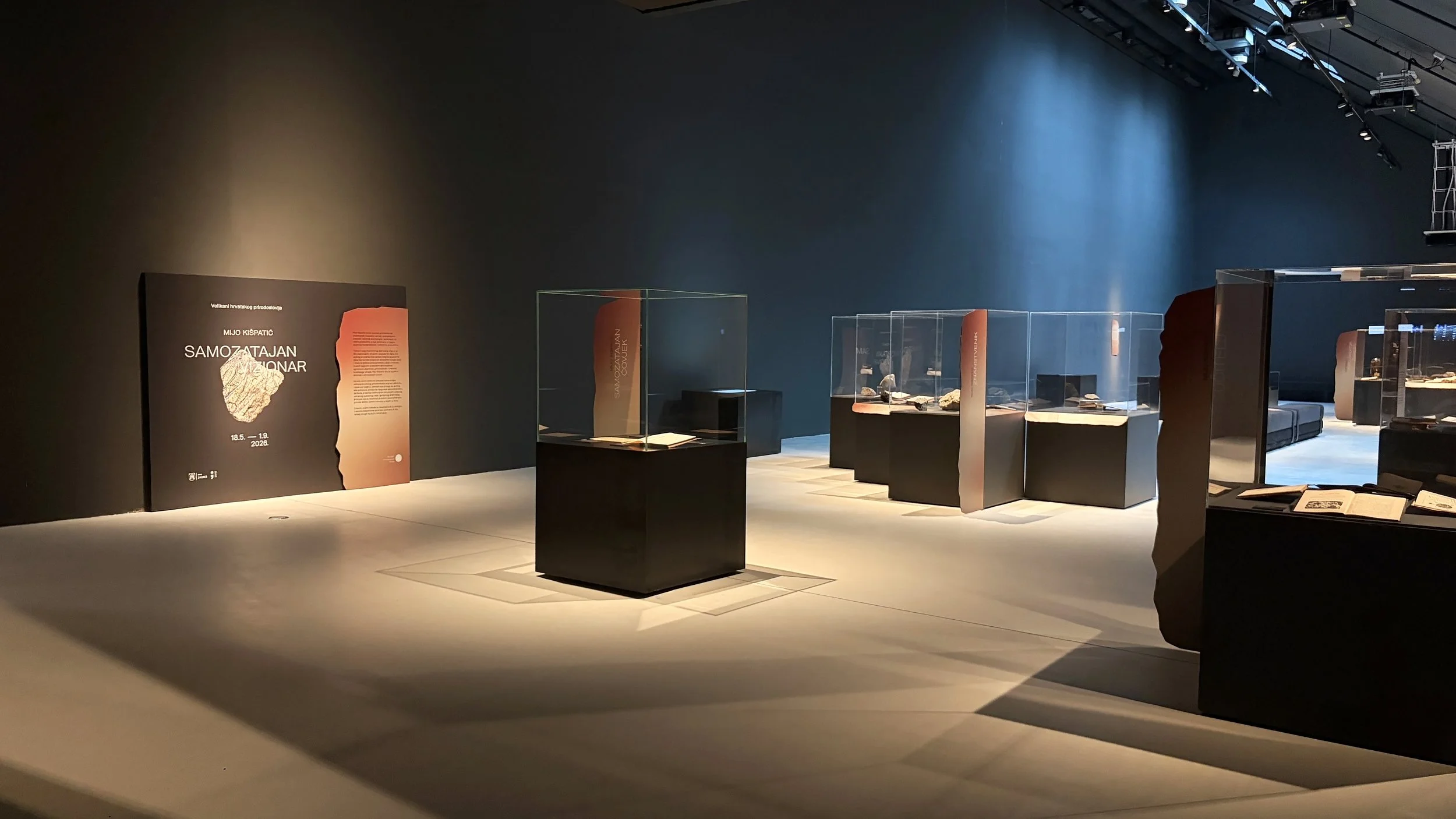
A rock fragment is extracted from its original context and transformed into the exhibition’s central visual motif. Its irregular form extends from the graphic identity into the physical space, shaping a series of organic panels that create a direct connection between the two-dimensional visual system and the spatial experience.
From fragment to form
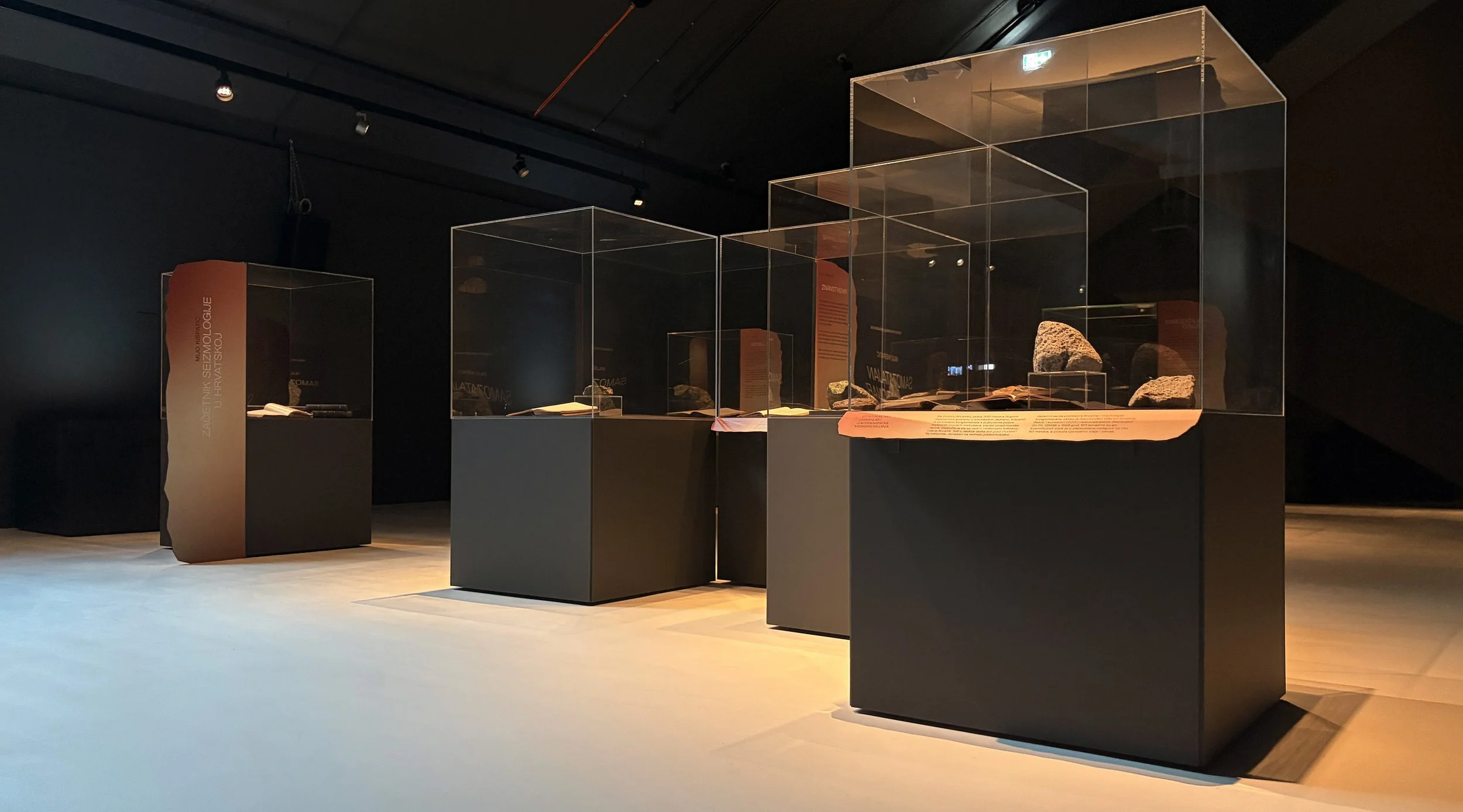
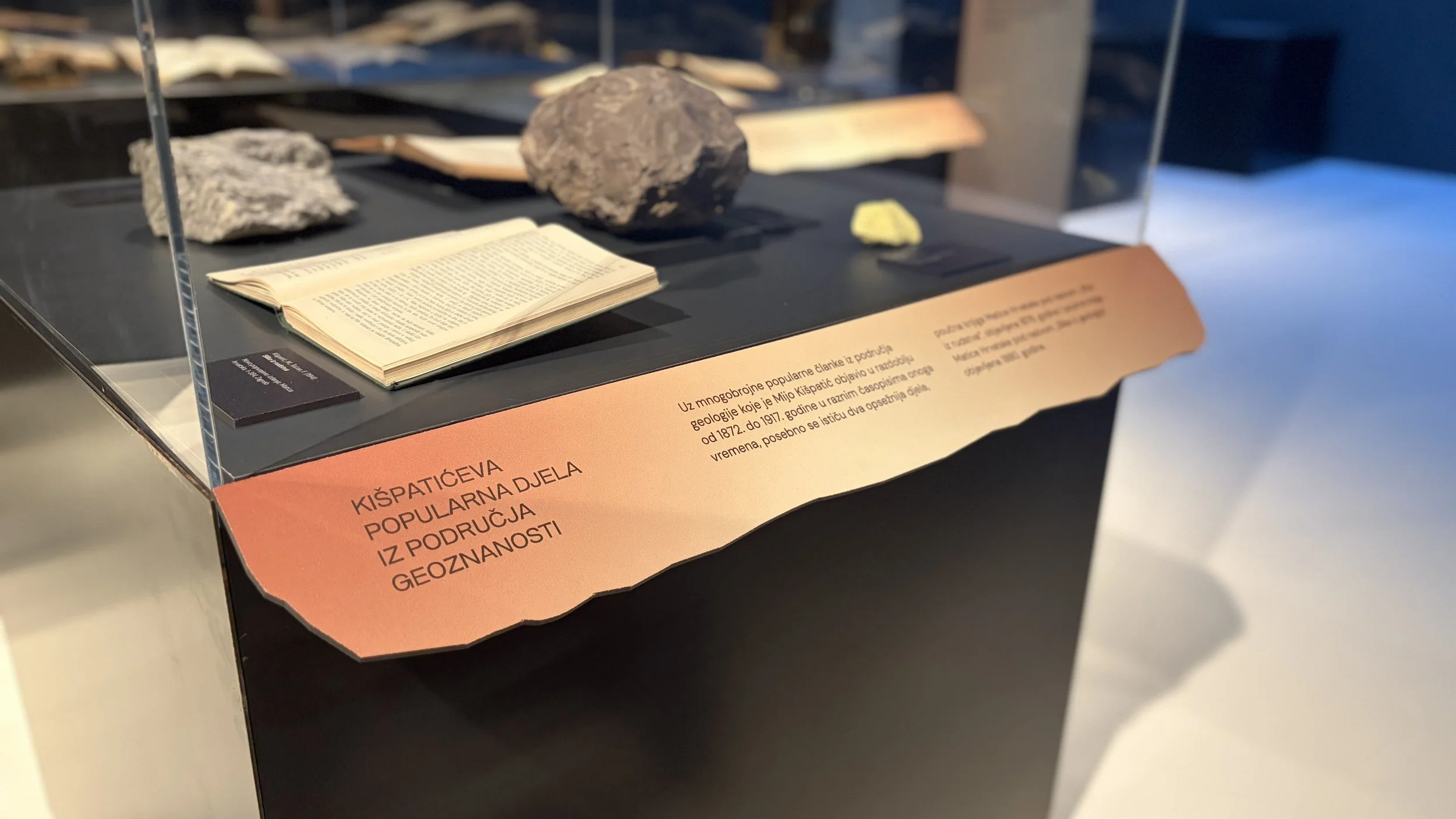
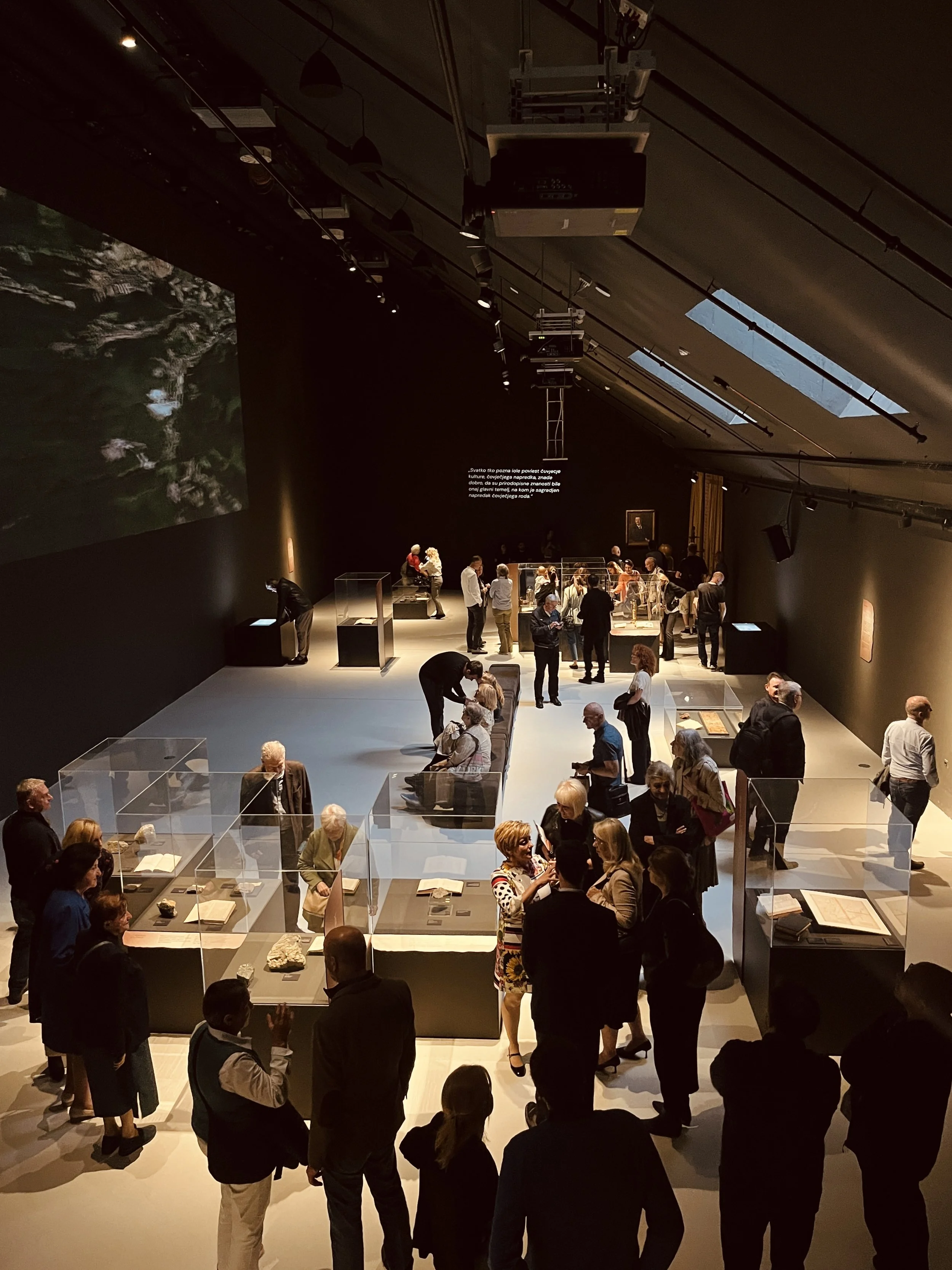
A system of introductory texts, gallery titles, and object labels was developed to structure the exhibition’s content and guide visitors through the space. The design emphasizes clarity, readability, and a consistent information hierarchy across the space.
Text & interpretation
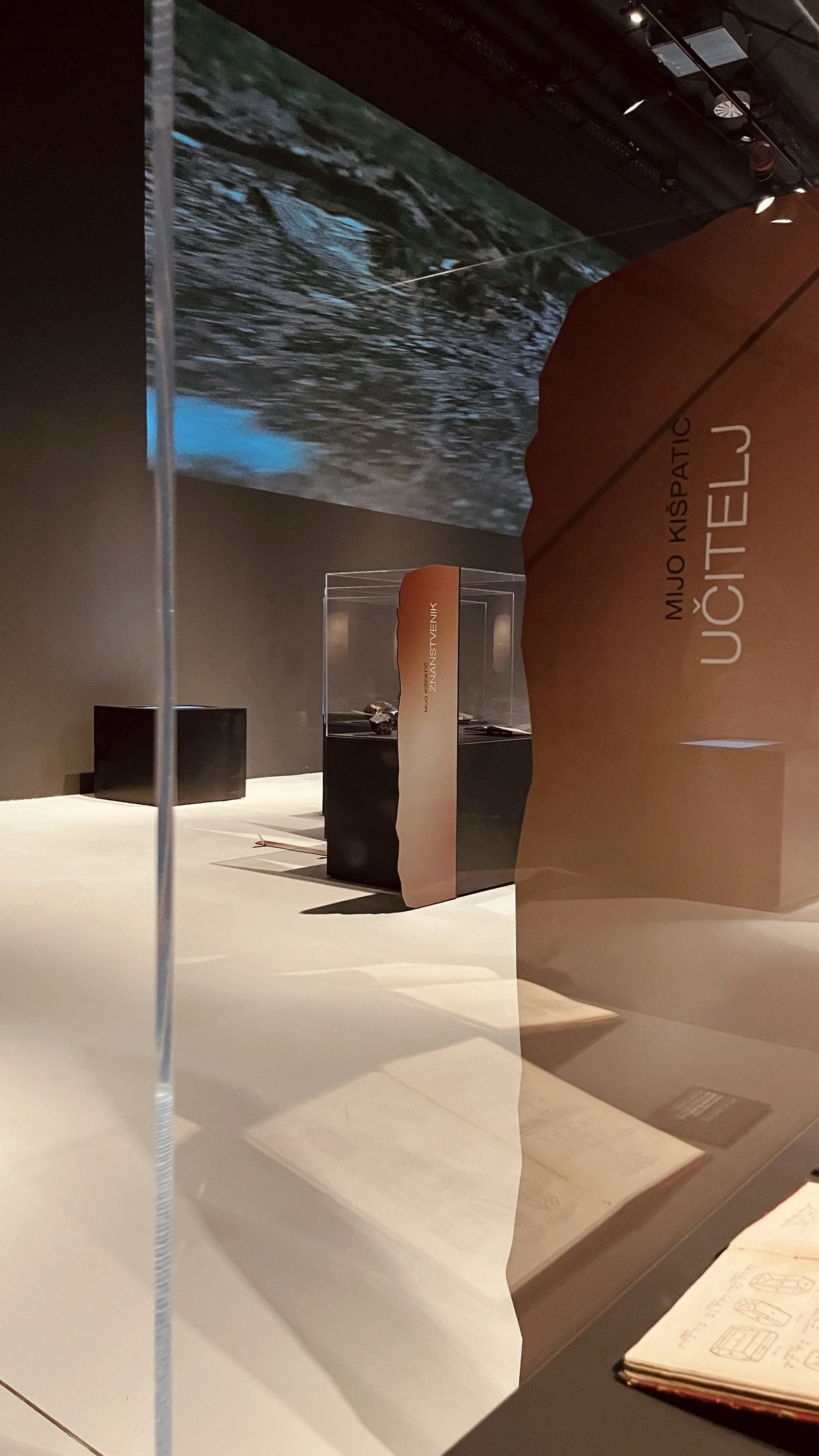
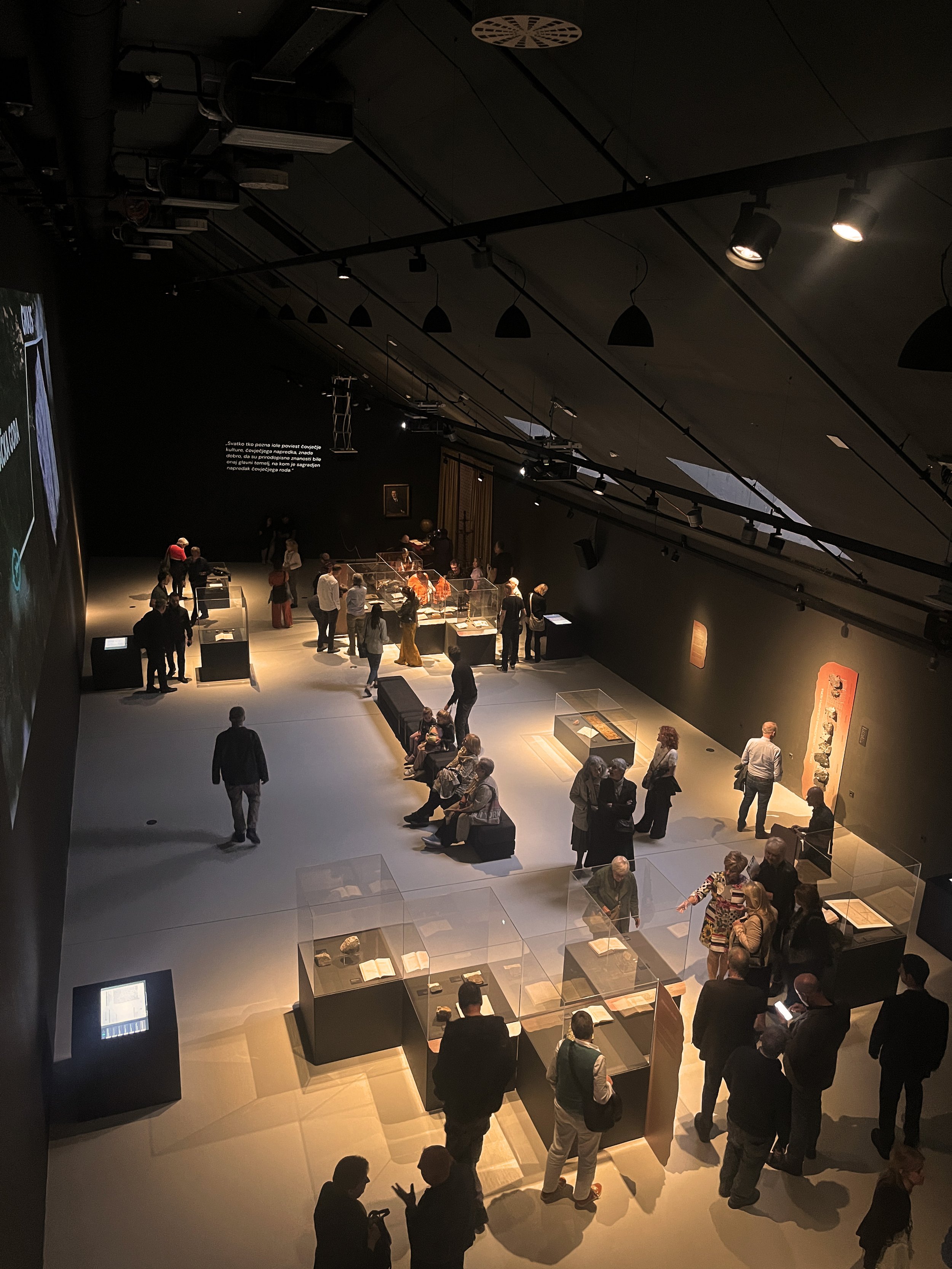
Spatial narrative
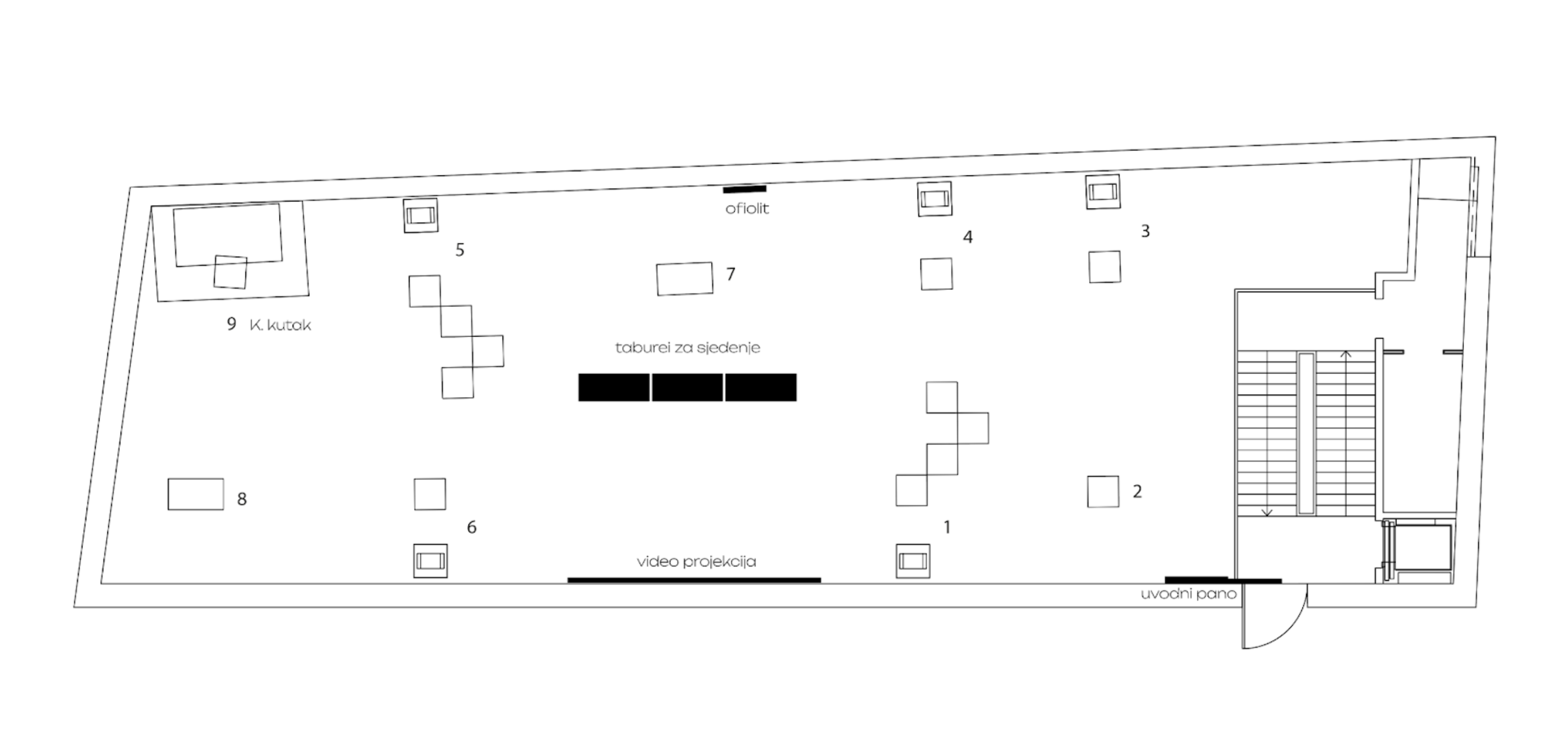
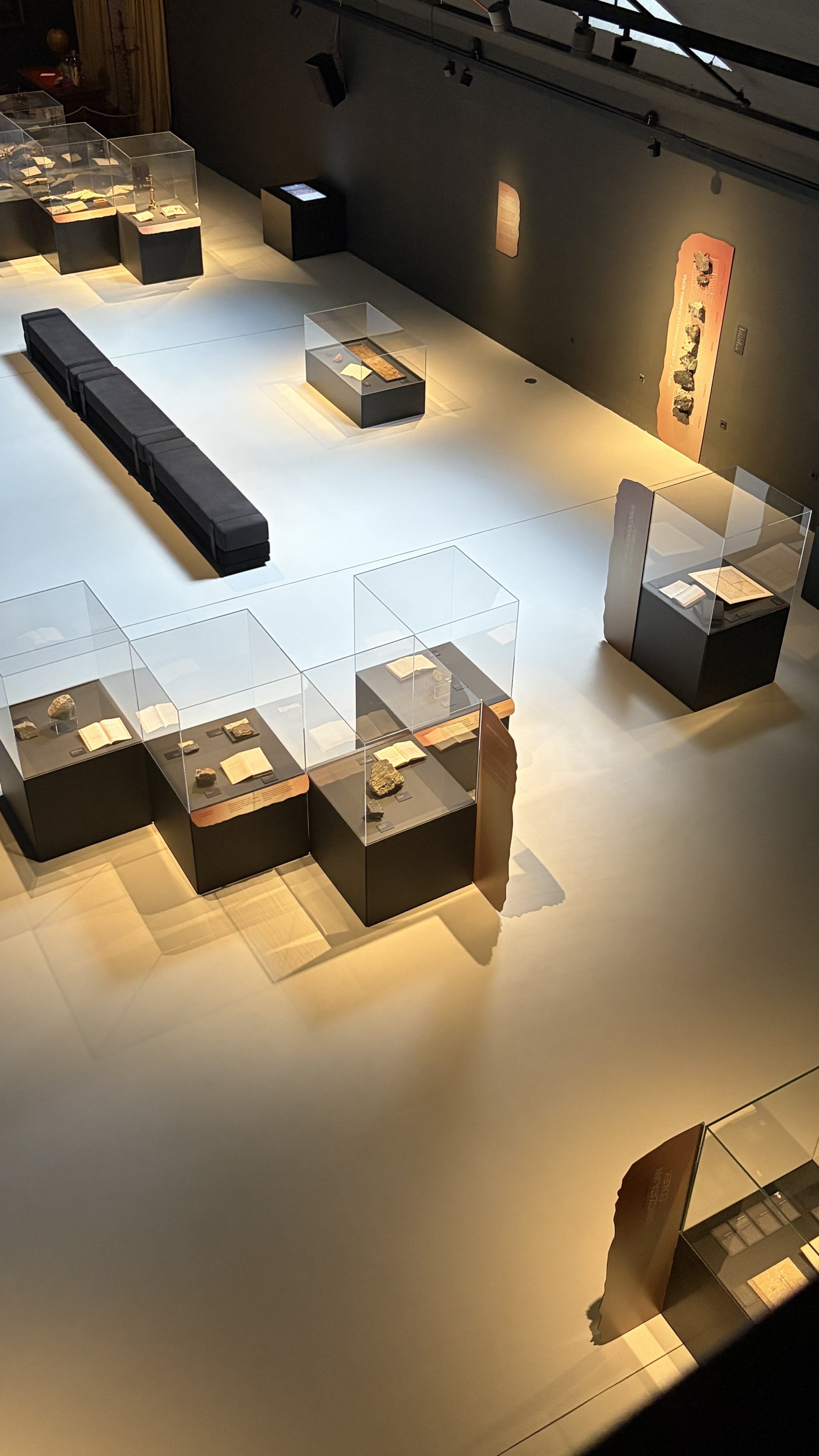
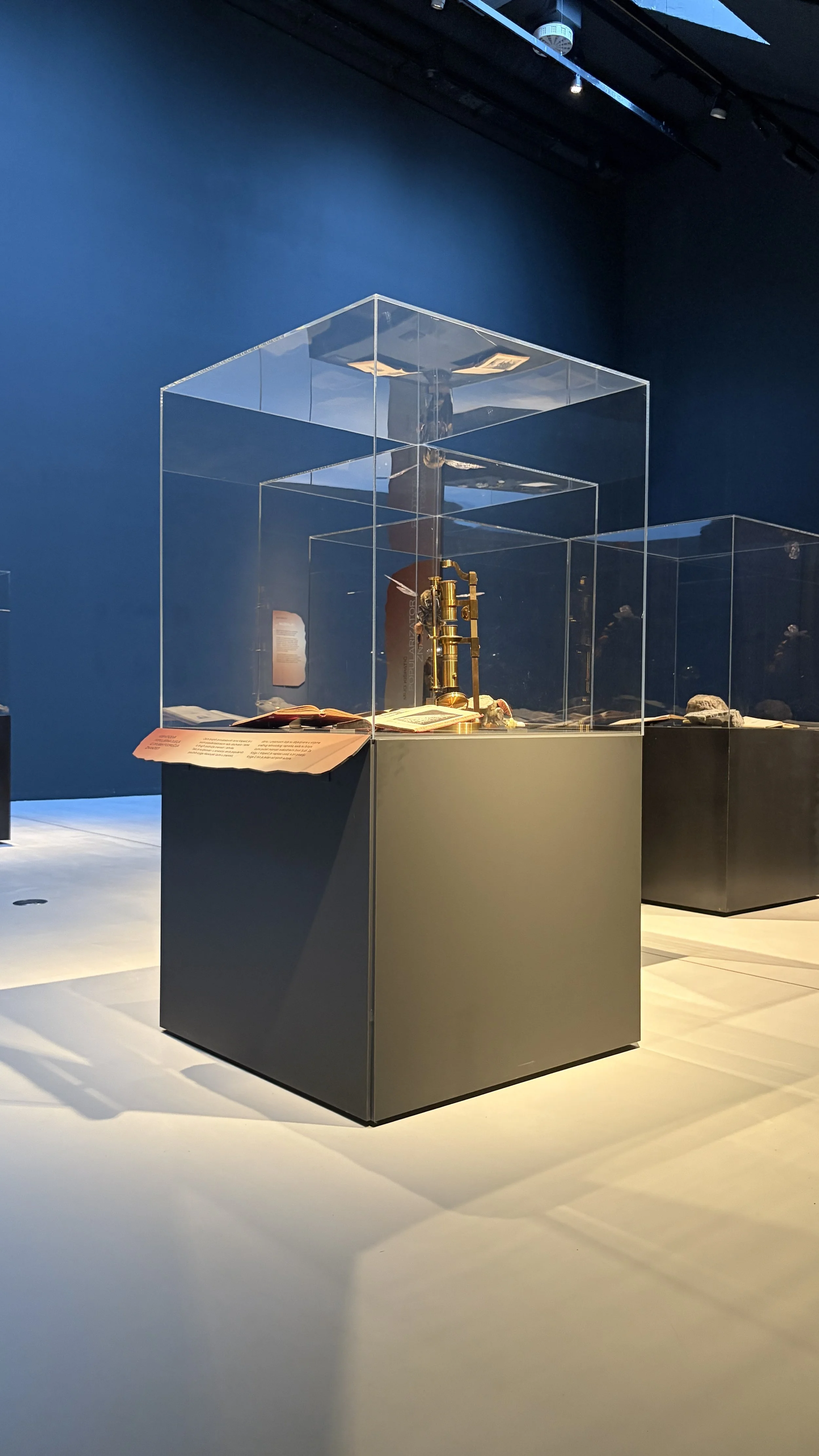
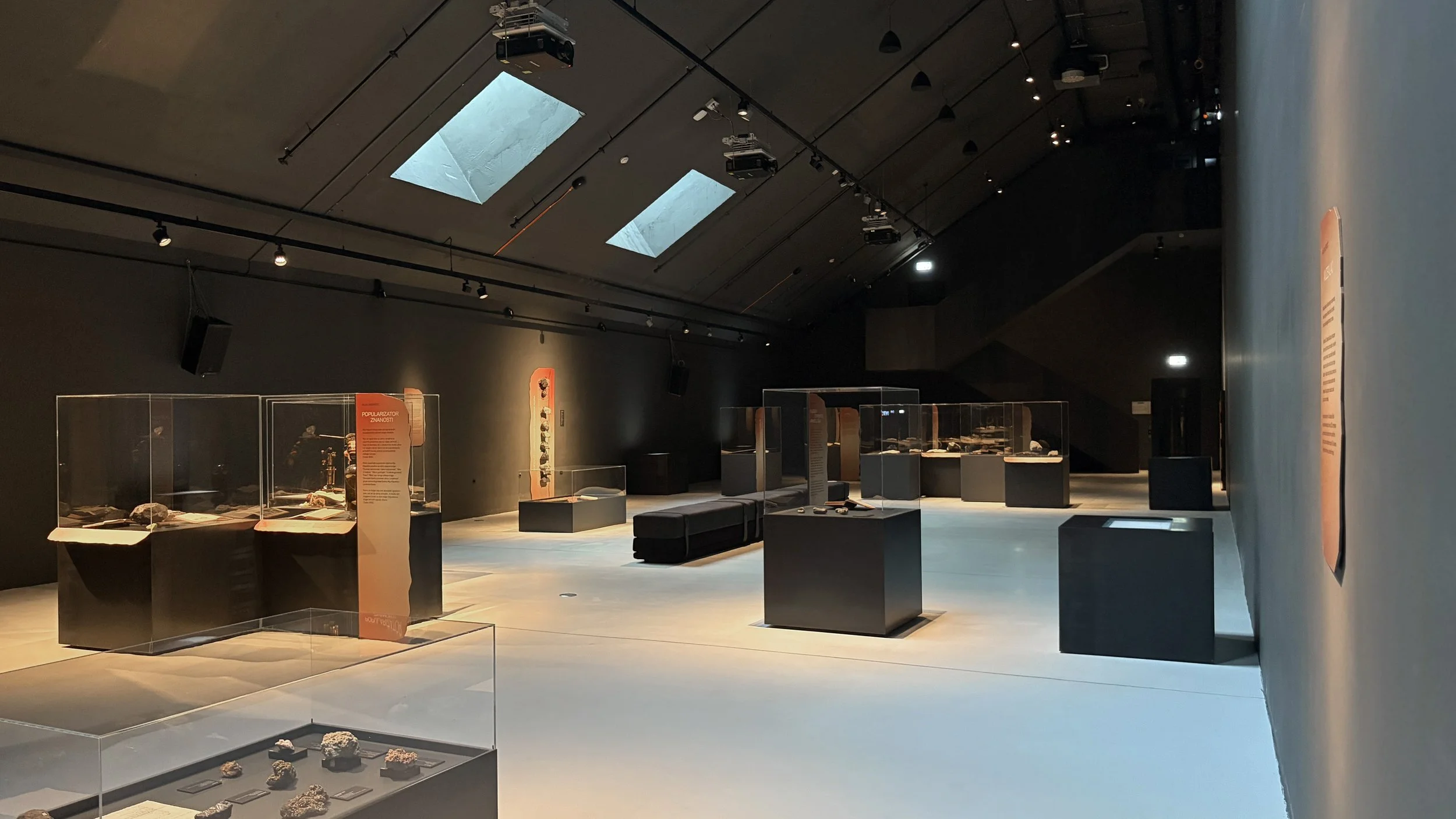
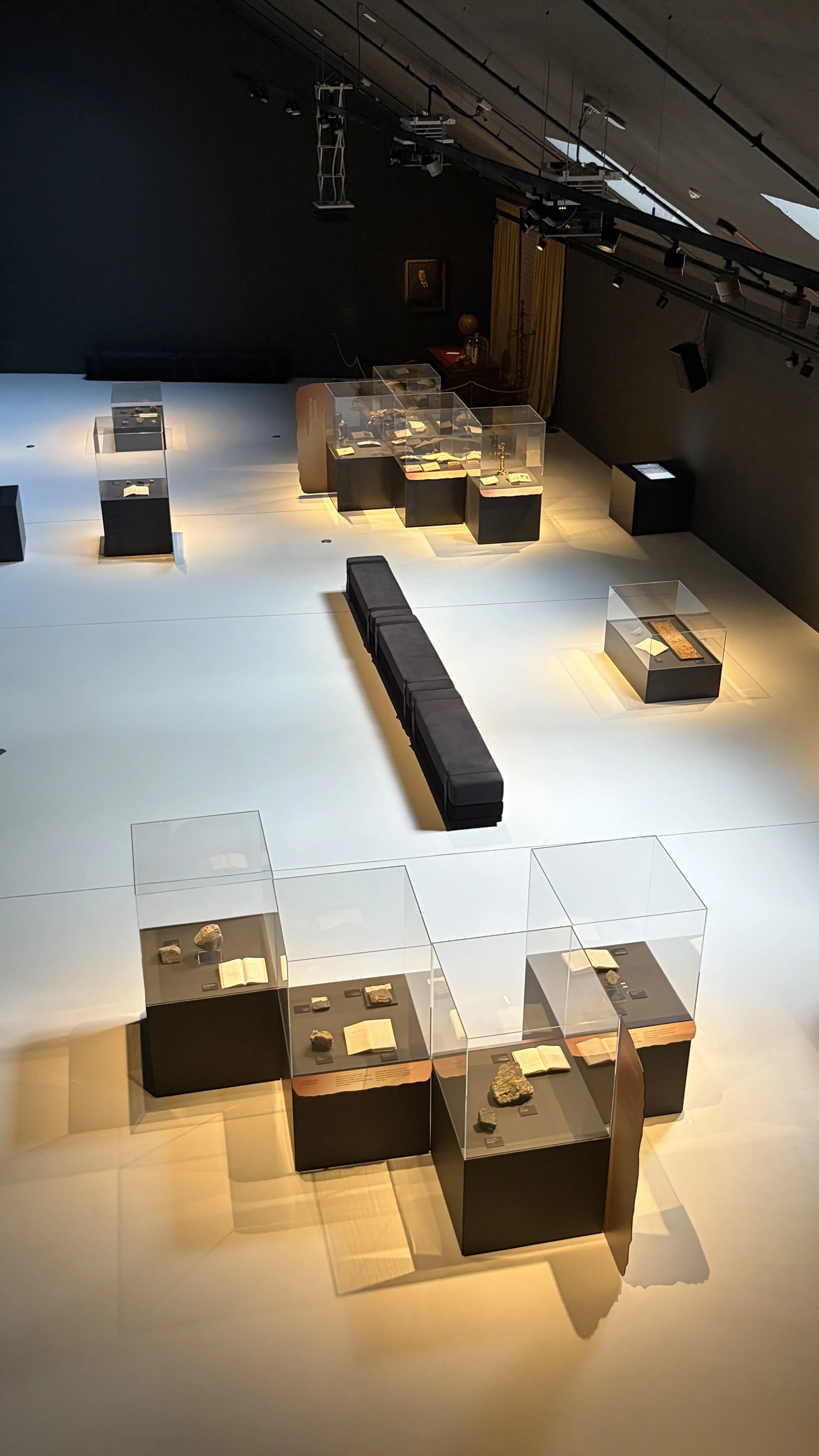
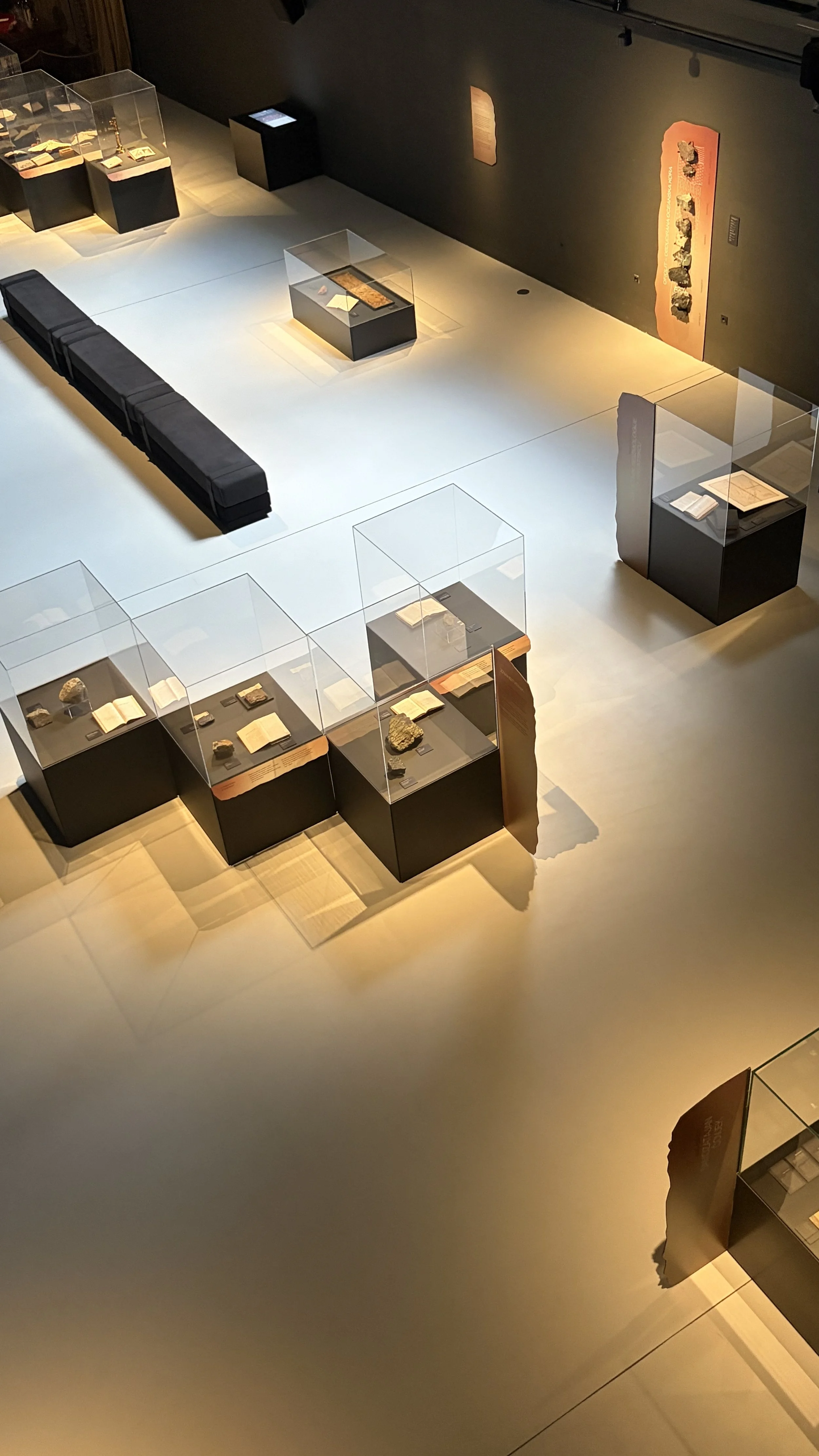
The spatial layout follows the exhibition’s thematic structure, with display cases arranged in carefully defined clusters that establish a clear narrative sequence and intuitively guide visitors through the space. The central zone remains open and visually unobstructed, creating a moment of pause within the exhibition and providing seating for visitors to experience the video projection.
Kišpatić’s corner
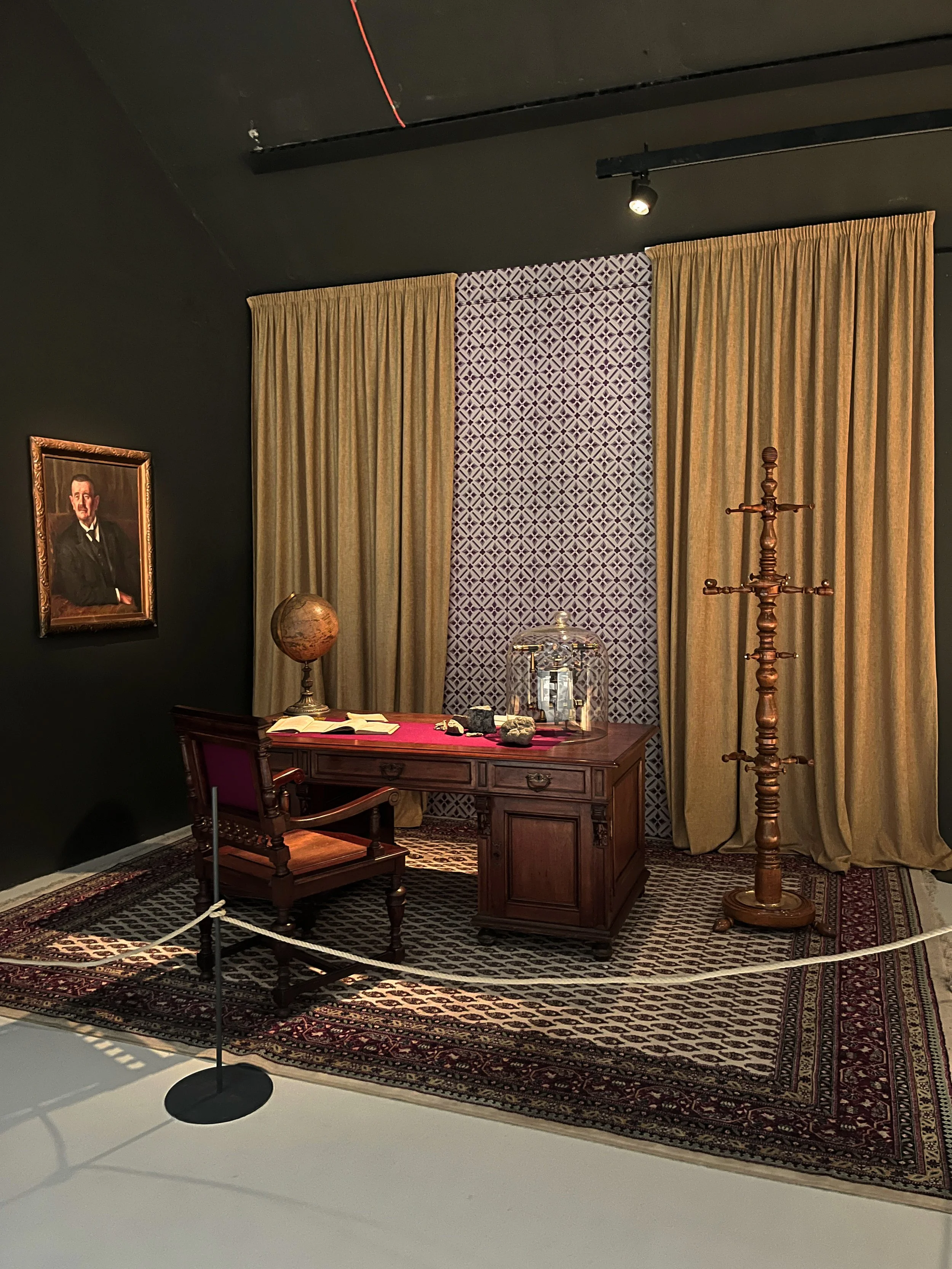
A recreation of Kišpatić’s corner at the Croatian Natural History Museum brings together period-inspired furniture, scientific objects, books, maps and mineral samples. Designed as an immersive spatial element, the installation offers visitors a glimpse into his working environment and the way he observed, documented and interpreted the world of rocks.